This was the second post from him History H701 course.
For this week’s discussion I used the Jerry Falwell library, specifically the American historical imprints database in order to look for primary sources to enhance a special topic that may be taught in an American history course. Continuing on with my topic of the Boston tea party I located two documents which I think would greatly enhance any course and student understanding of the events that took place.
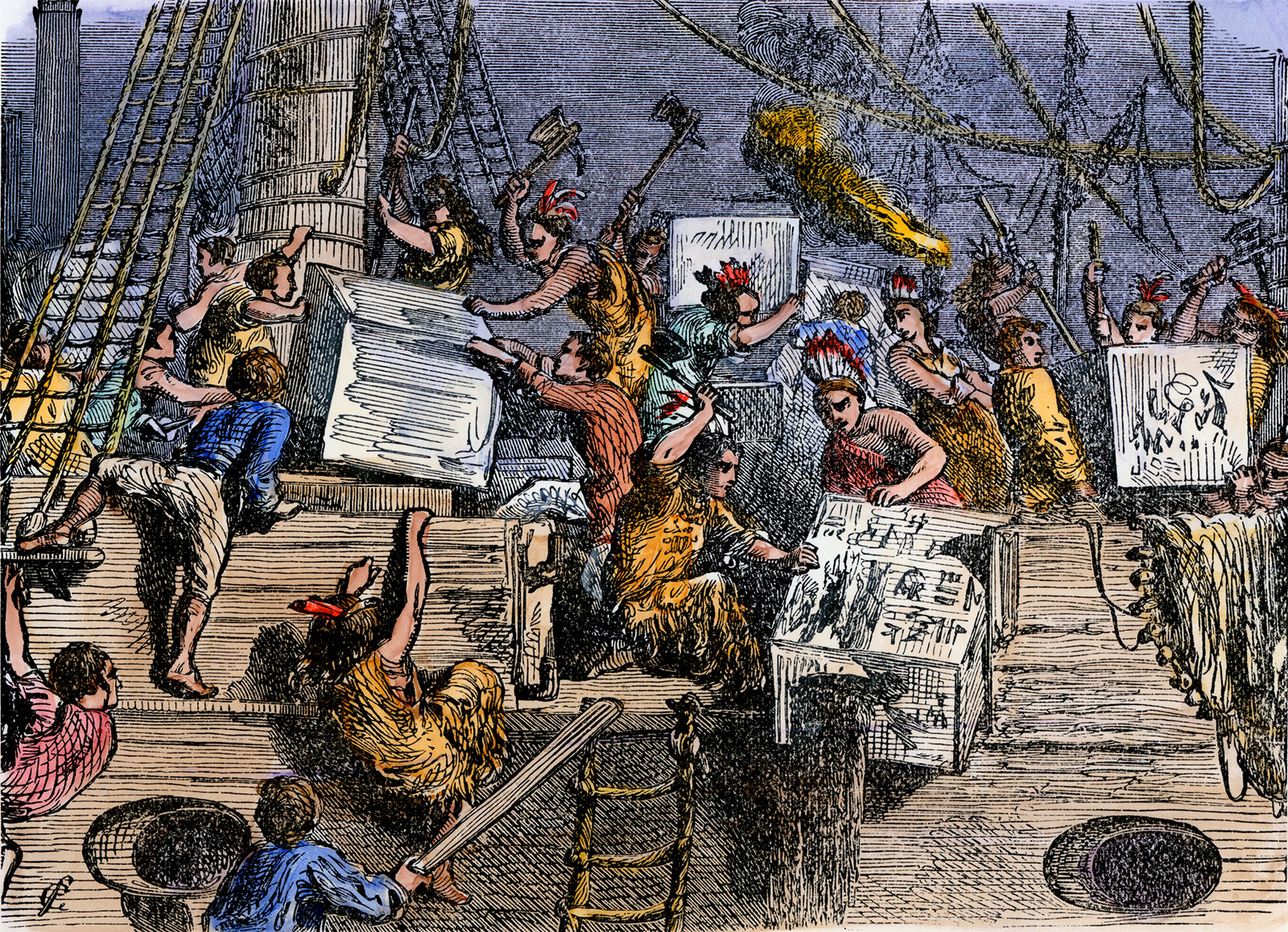
As I discussed last week, The Boston Tea Party which took place on December 16, 1773. On that night, approximately 50 members of the Sons of Liberty organized in part by Samuel Adams disguised themselves as Indians and bordered three British ships and threw its cargo of imported tea overboard. The “official” purpose of this action was to protest the British Tea Act of 1773.
The first Item I found was a notification produced by William Cooper who is the town clerk this notice was posted on November 17th, 1773, less than one month before the Boston tea party. In the notification Cooper writes “the town being greatly alarmed with the hourly expectation of the arrival of the teas exported by the East India company to this port and apprehending that they supposed consignees are now sufficiently informed upon what terms the tea is consigned to them – the select men, agreeable to the request of a number of the inhabitant, hereby notify the freeholders and other inhabitants of the town of Boston, Qualify as the law directs to meet at Faneuil- Hall tomorrow at 10:00 o’clock in the forenoon , in order to consult whether further application shall be made to said consignee’s, or otherwise to act as the town shouting proper at the present dangerous crisis.” At the bottom of the document, it states the select men earnestly recommend a general attendance of the inhabitants upon this very important occasion.
The second item I found Was a document circulated with what I would call a national song entitled Tea destroyed by Indians “Ye glorious sons of freedom, brave and bold, that had stood forth fair Liberty to hold; though you were Indians, come from defiant shores, like men acted not like Savage moors.” And then it breaks out into a chorus, which I won’t hurt you with my singing, but the first stanza reads “Bostonian sons keep your courage good or die like martyrs in fair freeborn blood our Liberty and life is now invaded, and freedom’s brightest charms are darkly shaded, but we will stand and think it Noble mirth too dart the man that dare oppress the earth.” This is an obvious reference to King George.
I believe these would enhance an American History Course, especially on the topic of The Boston Tea Party because, Students today have trouble understanding how items were communicated back during the revolutionary. In the days a video, Instagram and network news, it is hard for the average student to comprehend exactly what was necessary to rally a group of persons to protest. When looking at the protests that are currently happening in the United States it was social media in the news that disseminated the information this was never the case for the revolutionary period. Students seeing how notifications were posted, how songs inspired and how newspapers reported the events that take place is important for their understanding and appreciation for the founding fathers.
Overall, the database did not have a wealth of items specific to this topic. The search produced 15 results, and some were duplicate items. The database is very exciting to search and located primary sources.
“Notification,” 1773, https://docs.newsbank.com/openurl?ctx_ver=z39.88-2004&rft_id=info:sid/iw.newsbank.com:EAIX&rft_val_format=info:ofi/fmt:kev:mtx:ctx&rft_dat=0F2F81D9ACE7F8C0&svc_dat=Evans:eaidoc&req_dat=8A8B718A23D24E09993EC67C59F3D21D America’s Historical Imprints (liberty.edu)
“Tea, destroyed by Indians,” 1773, Song, in six stanzas, extolling the Boston Tea Party of 1773; first line: Ye glorious sons of Freedom, brave and bold.
Relief cut of a ship following title (Reilly 1130). https://docs.newsbank.com/openurl?ctx_ver=z39.88-2004&rft_id=info:sid/iw.newsbank.com:EAIX&rft_val_format=info:ofi/fmt:kev:mtx:ctx&rft_dat=0F2F81CA6180E398&svc_dat=Evans:eaidoc&req_dat=8A8B718A23D24E09993EC67C59F3D21D America’s Historical Imprints (liberty.edu)
 Mark A. King, PhD